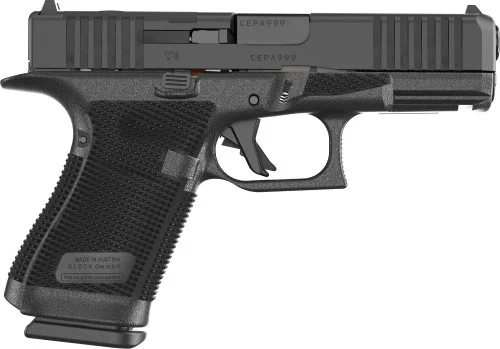
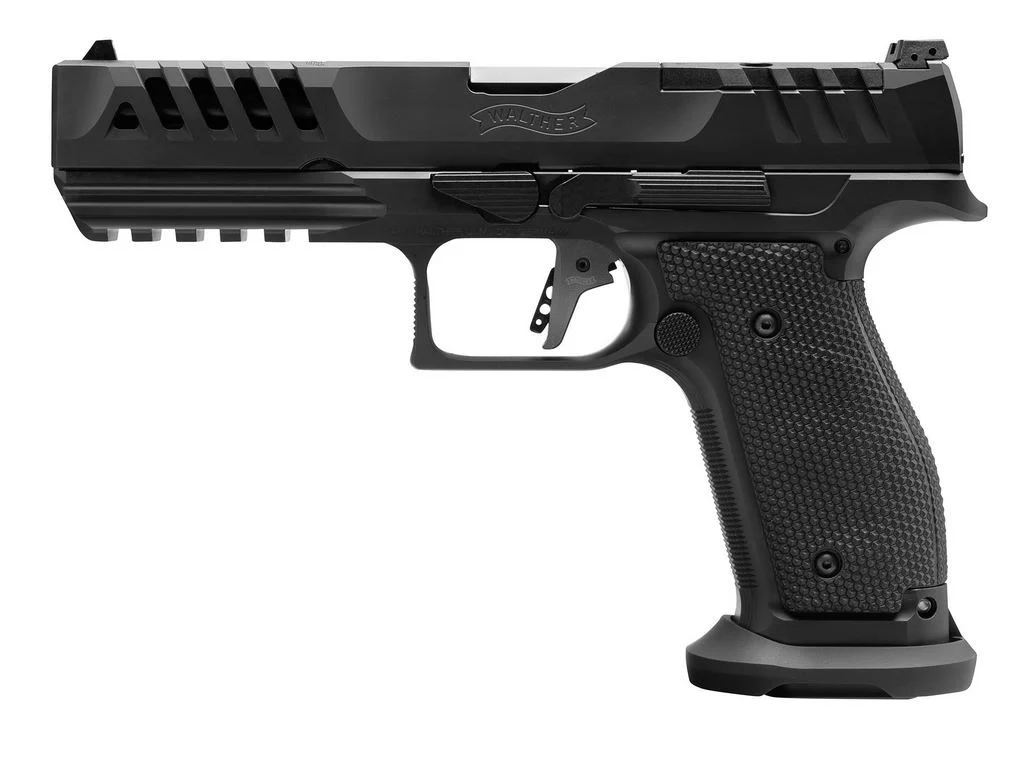
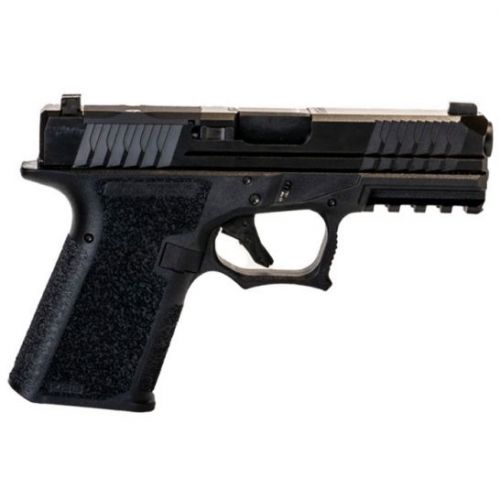
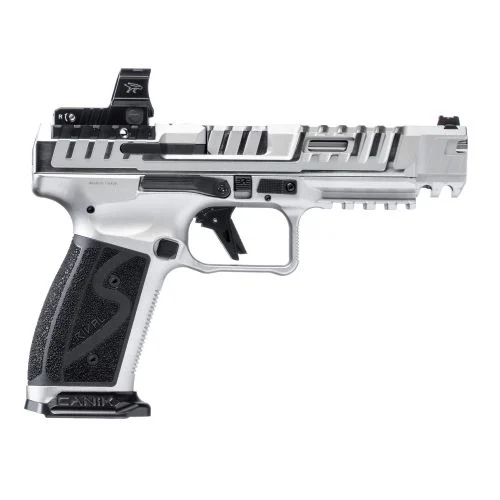
American-made Glock slides: materials, coatings and cuts
The aftermarket Glock slide is an American invention. Glock makes its slides in Austria and Georgia from forgings; the US aftermarket makes them from bar stock on CNC mills, cut for red dots and finished in coatings the factory does not offer. This guide explains how American slides are made, what the material and coating choices mean, how to read the cuts, which generation a slide fits and what to check before you buy one.
Material
Nearly every American aftermarket slide is machined from 17-4 PH stainless steel, a precipitation-hardening alloy that machines cleanly, takes a coating well and is hardened after machining to about 40 on the Rockwell C scale. Some makers use 416 stainless, which is softer and easier to machine. Glock's own slides are a carbon steel forging, nitrided; the aftermarket's stainless is not stronger, but it is more corrosion resistant under a scratched coating and it lets makers cut complex shapes from solid. A slide's material matters less than the coating and the machining tolerances, which is where makers differ.
Machining
A slide starts as a rectangular bar. Five-axis or multiple-setup three-axis mills cut the rails, the breech face, the extractor and striker channels, the barrel bore, the sight dovetail and front sight hole, the optic pocket and the serrations. The critical dimensions are the rail width and height, which decide fit on the frame, and the breech face and extractor channel, which decide reliability. Good makers hold those to the factory drawing and let their creativity into the outside surfaces. A slide that needs to be forced onto a frame or that rattles on it was cut wrong.
Optic cuts
The Trijicon RMR footprint is the default cut on American slides, shared by the Holosun 407C and 507C and many others. Slimline slides for the 43X and 48 are cut for the Shield RMSc pattern. Some makers offer the Aimpoint ACRO cut or a multi-footprint pocket with plates. A direct cut sits the optic lowest; a pocket with recoil bosses stops the optic shearing its screws. Check that the cut matches the optic you own, and that suppressor-height sights will co-witness through it.
Serrations and windows
Front and rear serrations are functional; they give the hand purchase for press checks and clearing. Top serrations cut glare. Windows and lightening cuts over the barrel reduce slide mass and speed the cycle, which usually calls for a lighter recoil spring and can expose the barrel to grit. A heavily windowed slide on a carry gun is a fashion choice with a reliability cost; a mildly serrated slide is a functional upgrade on any gun.
Coatings
Salt-bath nitride, also sold as QPQ or Melonite, is the standard: a diffusion treatment that hardens the surface and resists rust, in black or a grey finish. DLC, diamond-like carbon, is a thin, very hard coating with low friction and a matte black look. PVD coatings such as titanium nitride give gold and bronze finishes. Cerakote is a sprayed ceramic paint available in every color that wears at the rails and the muzzle. For a carry gun, nitride or DLC; for a range gun, whatever you like. A bare stainless slide needs oil in humid climates.
Weight and balance
A bar-stock stainless slide with no cuts weighs close to the factory slide; every window and pocket takes weight off. Makers publish slide weights, and the difference between a full slide and a heavily windowed one can be two ounces, which changes how fast the slide cycles and how much the muzzle rises. Lighter is faster and flatter with a matched spring and less forgiving of ammunition; heavier is steadier and more tolerant. For a carry gun, a slide within an ounce of factory weight with the factory recoil assembly is the safe choice. For a match gun, a lighter slide and a tuned spring are part of the fun.
Generation fit
Most American slides are Gen 3 pattern, which fits Gen 3 frames, most Gen 4 frames with a Gen 4 recoil assembly, and the aftermarket frames sold for that pattern. Gen 5 slides are made separately by fewer makers, with the beveled nose, the Gen 5 locking block engagement and the cut for the ambidextrous slide stop. Gen 3 and Gen 5 do not mix. Model matters too: a 19 slide takes a 19 barrel and recoil assembly and fits a compact frame; a 17 slide fits a full-size frame.
Stripped or complete
A stripped slide needs the completion parts: extractor with plunger, spring and bearing; striker, spring, cups and sleeve; firing pin safety and spring; channel liner; cover plate; sights. Use factory or established-brand parts for the extractor and firing pin safety. A complete slide includes all of it, often with a barrel, and is the way to buy if you do not want to assemble. American makers sell both; the listing says which.
What to check
- Model and generation, exactly.
- Optic footprint matches your optic.
- Standard Glock sight cuts, so your sights transfer.
- Coating suited to how you carry.
- Stripped or complete, and what is included.
- The maker's stated origin; we repeat it and do not upgrade it.
Fit the slide with your factory barrel and recoil assembly, cycle by hand, mount the optic with a torque driver and blue thread locker, and run 200 rounds before you carry it; a lightened slide may need a lighter spring. Pair it with an American barrel, see the makers in US-made Glock parts, and browse Glock slides; they ship to your door.
General information, not legal advice. Current as of September 2026. Laws change; check the official source before you act.