Building an all-American Glock: frame to sights
A Glock built entirely from American parts is a realistic project, because the US aftermarket makes every part of the pistol except the few reliability parts you should keep factory anyway. This guide is the parts list, in the order you buy it, with what stays factory, what the law requires of the frame, and the checks that make a pile of parts into a pistol you can trust. It assumes a Gen 3 pattern build, which is where the American aftermarket is deepest.
1. The frame
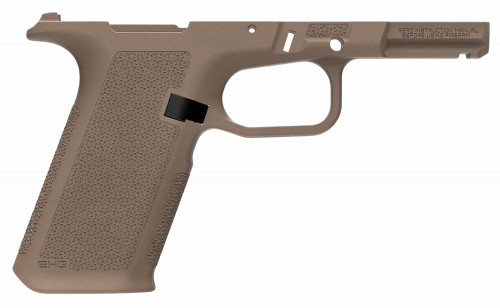
The frame is the firearm. You have two lawful routes: strip a factory Glock frame from a pistol you own, which gives you a Georgia or Austrian frame, or buy a serialized aftermarket frame in the Glock 19 or 17 pattern from an American maker. A serialized frame is a firearm under federal law and ships to a licensed dealer for the background check, exactly like a complete pistol. Unfinished frame kits that can be readily completed are also firearms under ATF's 2022 rule and go through a dealer as well; we do not sell unserialized frames. Aftermarket frames add grip texture, undercuts and different grip angles and take Gen 3 slides and parts.
2. Frame parts
The trigger housing, ejector, locking block, slide lock, magazine catch, pins and slide stop go in the frame. Keep the ejector housing and locking block factory or from an established American maker cut to the drawing; buy American pins and an extended slide lock if you like. A frame parts kit from a US maker covers all of it in one box; check that it lists the 9mm 336 ejector housing for a Gen 3 build.
3. The trigger
An American drop-in trigger with a flat or curved shoe, a minus connector and factory-weight springs gives a clean 4.5 pound pull that keeps the trigger safety tab, firing pin safety and drop safety working. Apex, Overwatch, Timney and others make them. Keep the firing pin safety and its spring factory. This is the one place where the origin of a part matters less than what it does; every trigger we list is a semi-automatic part.
4. The slide
An American slide in 17-4 stainless, cut for the RMR footprint if you want a dot, coated in nitride or DLC. Buy it stripped if you want to choose the completion parts or complete if you do not. The slide guide covers the choices.
5. Slide completion parts
Striker, striker spring, cups and sleeve; firing pin safety and spring; extractor with plunger, spring and bearing; channel liner; cover plate. American makers sell completion kits, and several make excellent strikers and plungers. For the extractor and the firing pin safety, factory or a US maker with a record; these two decide whether the pistol ejects and whether it is drop safe.
6. The barrel
An American match barrel, drop-in fit, 416R stainless, conventionally rifled, threaded if you have a use for threads. This is the part that shows on the target. The barrel guide covers the choices.
7. Recoil assembly
A US-made steel guide rod with an uncaptured spring lets you tune the weight to the slide and the load; start at 15 pounds for a lightened slide and 17 for a standard one on a 17 or 19, and test. For a carry build, a captured assembly is simpler.
8. Sights
American tritium or fiber-optic sights from Trijicon, Ameriglo, Dawson or Night Fision, suppressor height if there is a dot. Use the front sight tool and blue thread locker.
9. Magazines
Magpul PMAG GL9 magazines, molded in Wyoming and Texas, in 15 or 17 rounds where legal; an American aluminum baseplate if you want one. Factory Glock magazines are also made in the United States in some runs and are the other right answer.
10. The optic
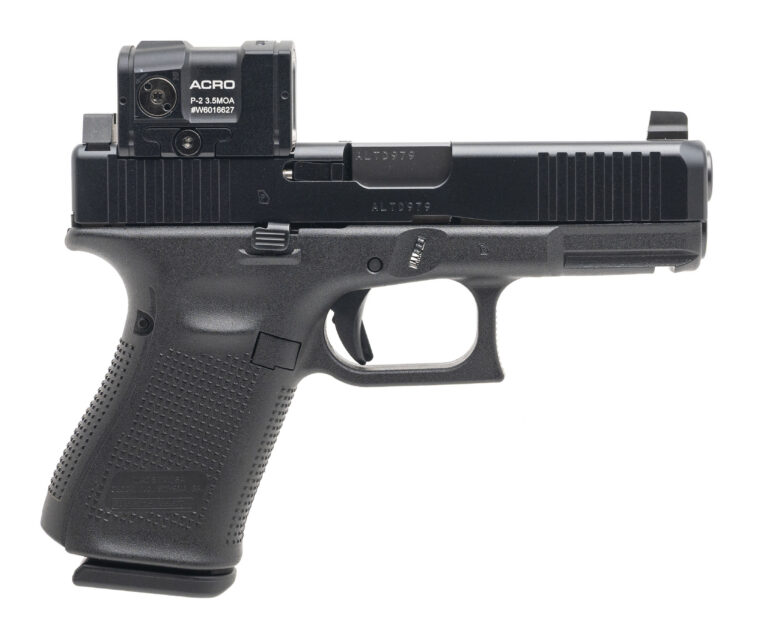
A Trijicon RMR is the American choice and the footprint the slide was cut for. Mount it with a torque driver and thread locker and zero it after the first 100 rounds.
Budget and order
An all-American build costs more than a factory pistol and less than most people expect, because the expensive parts are the slide, the barrel and the optic and everything else is small. Buy the frame first so the dealer transfer is done, then the slide and barrel together so they can be fitted as a pair, then the trigger, then sights, then the optic last when you know the slide's footprint is right. Keep the boxes; a build with its parts documented resells well.
What stays factory
- Firing pin safety and its spring.
- Striker spring weight on a carry build.
- Extractor and ejector, unless from a US maker with a record.
- Locking block, cut to the drawing.
Assembly and checks
Assemble the frame first, then the slide, then fit them together and cycle by hand; the slide should run smoothly with no force. Run the function checks: trigger safety, firing pin safety with the slide off, drop safety and slam test with the slide on, reset. Measure the trigger. Then 200 rounds at the range, including the carry load if it will be carried, watching for extraction, light strikes and slide return. Adjust the recoil spring until brass lands three to six feet to the side. Record the parts and the round count.
The legal basics
The frame is the only regulated part and it goes through a dealer. Everything else ships to your door where your state allows; a few states restrict threaded barrels and several cap magazine capacity. The finished pistol is yours to own, carry and sell under the same rules as a factory Glock. See who makes the parts in US-made Glock parts, and browse frames, slides and barrels.
General information, not legal advice. Current as of September 2026. Laws change; check the official source before you act.